
Why Screed Drying and Commissioning Need Specialist Handling on School and College Projects
Education construction doesn’t behave like other sectors. School and college projects are almost always tied to a fixed reopening date, the start of term, set months in advance and driven by enrolment numbers, staffing, and transport arrangements that can’t simply slip by a few weeks. Much of the work has to happen in a compressed window, often the six-to-eight-week summer holiday, with no realistic option to “finish it in October instead.” And where phased work runs during term time, live classrooms, halls and corridors sit metres away from an active construction zone, with pupils and staff on site throughout.
We’ve picked up more education projects over the past year, and the pattern echoes what we see on healthcare sites: the margin for error on screed drying and commissioning is much tighter here than on a typical commercial build.
Why Education Programmes Can't Absorb Screed Delays
Most construction sectors can flex a handover date by a few weeks if something runs long. Schools, colleges and universities generally can’t. A new classroom block, hall, science wing or student accommodation building is often tied to:
- A fixed term-start date set by the academic calendar, with pupils, students and staff arriving on a specific day
- Local authority, academy trust or governing body sign-off tied to admissions and capacity planning
- A summer holiday works window that’s fixed in length and can’t be extended once term resumes
- Decant and migration plans for moving pupils, classes or departments from an old space into a new one
A screed that takes longer than expected to dry doesn’t just delay flooring on an education project it can mean a building isn’t ready for the first day of term, with knock-on consequences for admissions, transport and staffing that go well beyond the construction programme itself.
Why Floor Performance Matters More in a Learning Environment
Flooring in a school or college isn’t just aesthetic. Classrooms, halls, dining areas, science labs and sports facilities are specified for heavy daily footfall, durability under furniture and equipment, and safety underfoot for children and young people. Most of these finishes are far less tolerant of residual moisture than standard commercial flooring and a flooring failure in a classroom or hall isn’t a snagging issue, it’s a safety concern and a reputational one with parents, governors and the local authority.
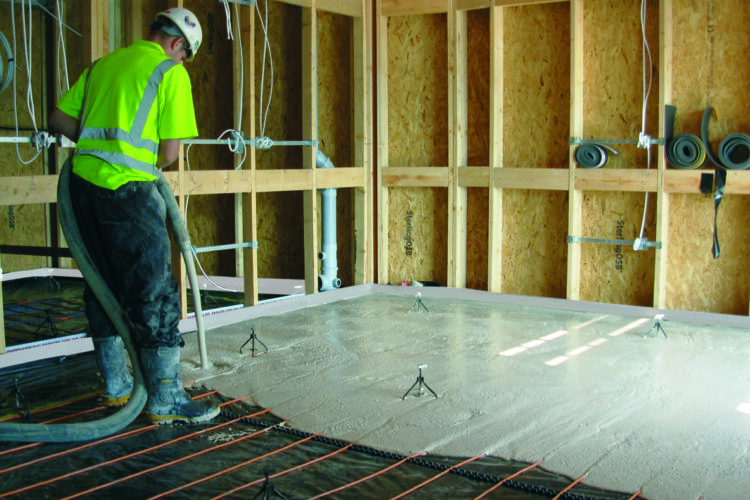
Where underfloor heating is specified increasingly common in new-build and refurbished education spaces for comfort and energy efficiency the same BS8204-7 commissioning requirements apply as on any other project. The difference is what happens if it’s skipped: a cracked or de-bonded floor finish in a classroom or corridor isn’t something you can rope off for a few days mid-term. It’s a space that needs to be back in use the next morning.
Live-Site Working Adds Another Layer of Complexity
Many education projects run construction work directly alongside occupied buildings sometimes on the other side of a temporary hoarding from a classroom in use. That changes how drying and commissioning equipment needs to be specified and managed:
- Noise and vibration from equipment need to be considered around teaching spaces and exam periods
- Dust and airborne particulate control is critical near occupied classrooms and dining areas, which affects how drying programmes are sequenced
- Access windows can be tightly restricted, with equipment only able to move through certain routes outside the school day or during holiday periods
- Safeguarding protocols may govern how and when contractors move around a site where children are present
A drying and commissioning programme that works on a standard commercial site doesn’t automatically transfer to a live education environment. It needs to be planned around the realities of the site and the academic calendar, not just the screed.
Why Specialist Commissioning Matters Even More Here
Most construction projects can skip proper screed commissioning and get away with it most of the time. On an education project, “most of the time” is a much harder risk to justify. A reopened floor, a relocated class, or a building that isn’t ready for the first day of term isn’t an inconvenience it has a direct impact on pupils, staff and the school’s relationship with parents and governors, on top of the usual financial and reputational fallout for the contractor.
Education projects are exactly where the gap we’ve talked about before nobody clearly owning screed commissioning becomes the most expensive to leave unfilled, because the deadline that gets missed is a term-start date, not a moveable milestone.
How ForceDry Supports Education Projects
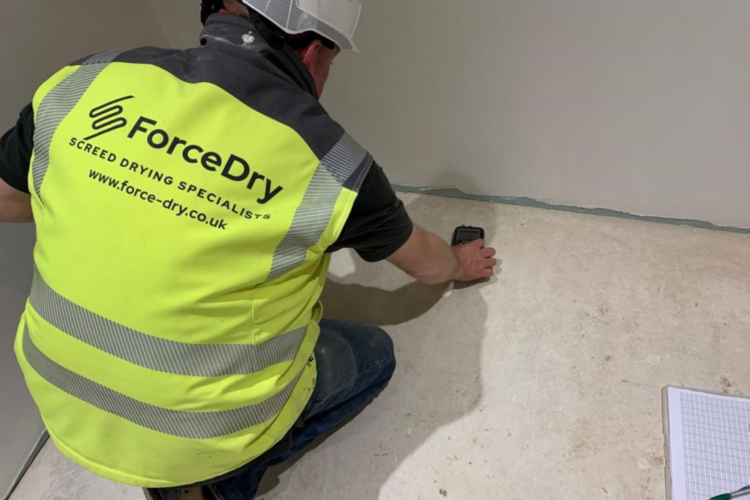
We bring the same specialist drying and BS8204-7 commissioning process to school, college and university projects that we do everywhere else, adapted to the constraints of working on or near a live education site:
- Programmes calculated against your specific screed and depth, built around fixed term-start dates and the summer holiday works window
- Equipment and scheduling that accounts for noise, access and safeguarding requirements
- Fully documented commissioning, giving trusts, local authorities and main contractors the compliance evidence they need at handover
- Experience working alongside live education operations without disrupting teaching
If you’ve got a school, college or university project with a screed drying or underfloor heating commissioning requirement, the earlier this gets into the programme, the less risk it carries against a term-start date that almost certainly can’t move.
Get in touch with ForceDry to discuss how we can help you keep on target. .
Contact the team today;


Related Blog Posts