
Screed Drying vs Screed Commissioning: What's the Difference (And Why You Probably Need Both)
“We’ve already dried the screed, so it should be fine” is one of the most common, and most costly assumptions, on projects with underfloor heating. Drying and commissioning sound similar, and they’re often handled by people who use the words loosely. But they’re two distinct processes, solving two different problems, and skipping one because you’ve done the other is how avoidable defects happen.
Here’s the distinction, in plain terms.
Screed Drying: Getting Moisture Out
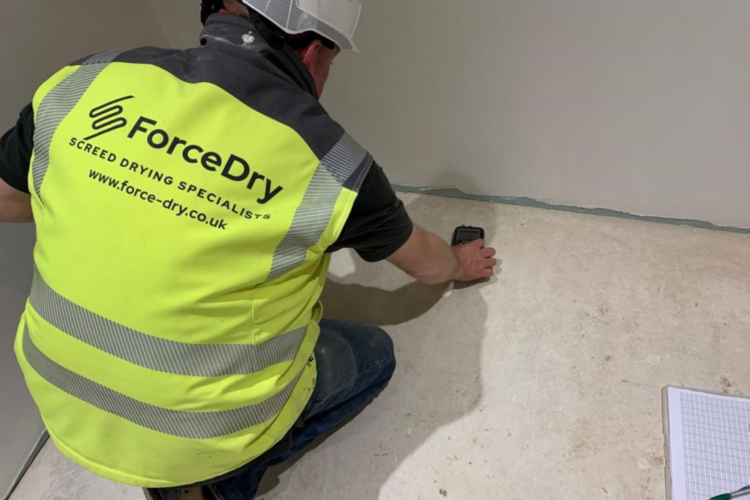
Screed drying is about removing the construction moisture that’s naturally present in a freshly laid screed the water used to mix it in the first place. Until that moisture has reduced to an acceptable level (typically measured against a relative humidity threshold, depending on the flooring finish), the screed isn’t ready for floor coverings.
Accelerated drying using dehumidifiers, heaters or boilers and air movement in a controlled way can bring this down from many weeks to a fraction of the time, without compromising the screed. This is the stage most people in construction are familiar with, and it’s the one most commonly discussed when people talk about “screed drying time.”
Screed Commissioning & Conditioning: Introducing It to Heat
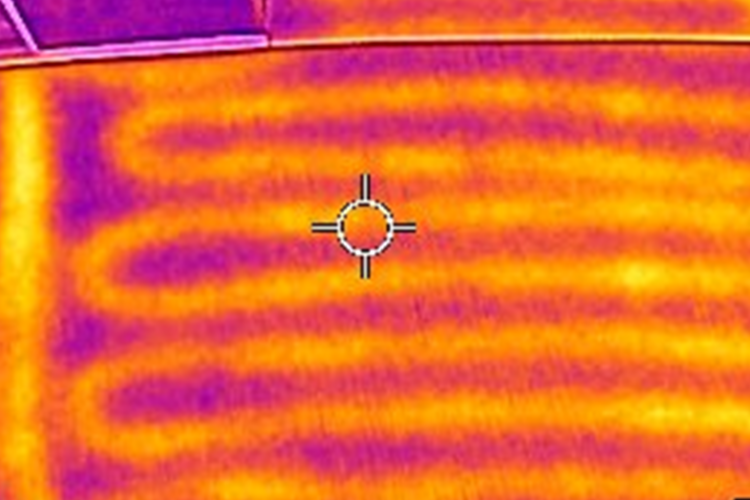
Commissioning and conditioning is a different process entirely, and it only applies where there’s underfloor heating. Once the screed is dry, it still needs to be gradually introduced to operational heat raised to its target temperature in controlled stages, held there, and then gradually cooled before the heating is used normally and before flooring is installed.
This process is governed by BS8204-7. Its purpose isn’t to remove moisture (though some residual moisture is released as a byproduct); it’s to prevent thermal shock the cracking, curling and de-bonding that happens when a screed experiences rapid temperature change for the first time.
So Why the Confusion?
Both processes can involve similar equipment dehumidifiers, heaters, fans which is part of why they get mentally lumped together. And because drying happens first, it’s easy to assume that once it’s done, the screed is “ready” in every sense. In reality:
| Screed Drying | Commissioning & Conditioning | |
| Purpose | Remove construction moisture | Introduce screed to heat safely |
| Applies to | All screeds | Screeds with underfloor heating |
| Governed by | Manufacturer RH thresholds | BS8204-7 |
| Risk if skipped | Flooring failure from residual moisture | Thermal shock: cracking, curling, de-bonding |
| Timing | Before flooring and before commissioning | After drying, before flooring goes down |
Do You Need Both?
If your project has underfloor heating, the honest answer is almost always yes. A screed can be perfectly dry and still suffer thermal shock if it’s switched on at full operating temperature without conditioning first. Equally, conditioning a screed that’s still holding excess construction moisture won’t give you reliable results the moisture needs to come out first.
The two processes are sequential, not interchangeable, and a project that only does one isn’t fully protected.
How ForceDry Handles Both
We provide accelerated screed drying and BS8204-7 commissioning & conditioning as connected stages of the same programme calculated against your specific screed brand and depth, using our dehumidifiers, heaters and air movers, and documented so you have clear evidence of compliance at every stage.
Because we specialise in both, you’re not relying on separate trades to coordinate a process that genuinely needs to happen in sequence.
Not Sure Which Stage Your Project Needs?
If you’re unsure whether your screed has been properly dried, properly commissioned, or both, it’s worth checking before flooring goes down rather than after.
Get in touch with ForceDry to find out how a properly conditioned screed protects your programme, your warranty and your reputation. Or read more about our Commissioning & Conditioning service here.
For Screed Drying you can read more here.
Contact the team today;


Related Blog Posts