
Why Traditional Screed Drying Is Slowing Your Project Down (And What to Do Instead)
In construction, speed and efficiency are everything. Deadlines are tighter, programmes are more demanding, and delays can have serious financial consequences. Yet one of the most common bottlenecks on site remains unchanged: screed drying.
Traditional drying methods are still widely used across the UK, but they are often one of the biggest causes of programme overruns. Understanding why this happens and what alternatives are available can make a significant difference to your project’s success.
The Problem with Traditional Screed Drying
Under standard conditions, screeds dry at a rate of around 1mm per day for the first 40mm, and approximately 0.5mm per day thereafter. That means even a relatively standard 50mm screed can take over 60 days to dry naturally. This doesn’t include additional time required for commissioning and conditioning cycles, which can add weeks to the programme.
In reality, drying times are rarely consistent. Factors such as temperature, humidity, ventilation, and site conditions all play a role. Poor weather, especially in the UK, can significantly slow progress in traditional drying. As a result, contractors are often left waiting, with follow-on trades delayed and project timelines pushed back.
What Is Force Drying?
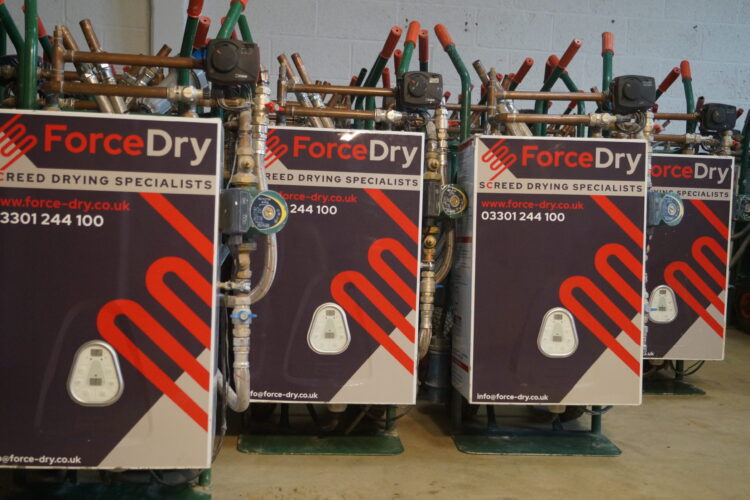
Force drying is a controlled process that accelerates the removal of moisture from screeds using specialised equipment. This typically involves a combination of industrial boilers, dehumidifiers, and air movement systems to create the optimal drying environment.
Rather than relying on unpredictable natural conditions, force drying allows contractors to take control of the drying process. By managing temperature, airflow, and humidity, moisture can be extracted far more efficiently and consistently.
How Force Drying Works
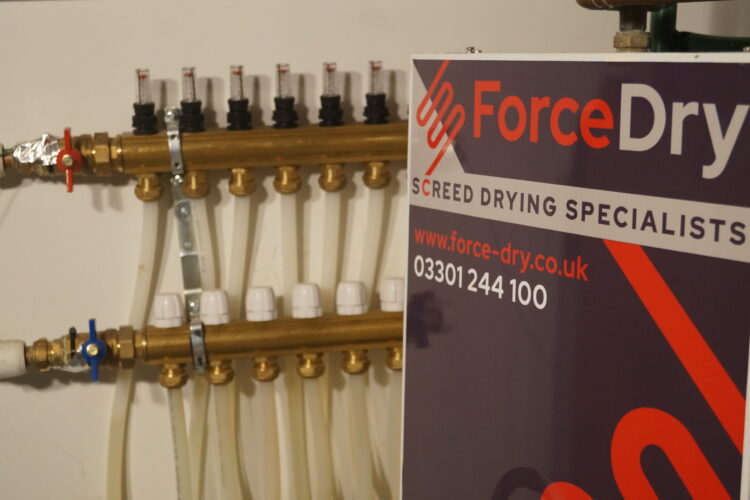
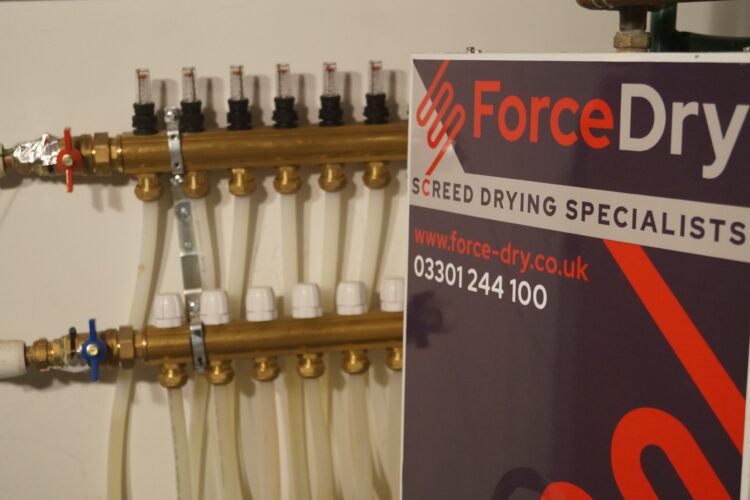
Force drying systems are designed to create ideal drying conditions within a controlled space. Heating screed with ufh increases the rate of evaporation from the screed surface, while dehumidifiers remove moisture from the air, preventing saturation. Air movement ensures that moisture is continuously drawn away rather than settling back into the material.
This coordinated approach dramatically improves drying efficiency compared to natural methods. It also reduces the risk of uneven drying, which can lead to defects or failed moisture tests later in the project.
Why Traditional Methods Slow Projects Down
The biggest issue with traditional drying is the lack of control. Construction programmes are planned around estimated drying times, but these estimates are often optimistic. Any change in site conditions can extend drying periods significantly.
This creates a knock-on effect across the entire project. Flooring contractors, decorators, and other trades are unable to proceed until moisture levels are within acceptable limits. In some cases, projects are forced to pause altogether, leading to increased labour costs and potential penalties.
Additionally, failed moisture tests are a common issue when relying on natural drying. If a screed hasn’t reached the required relative humidity level, further delays are inevitable.
The Benefits of Force Drying
Force drying offers a practical solution to these challenges. By accelerating the drying process, contractors can significantly reduce programme time and improve project certainty.
One of the key advantages is predictability. With controlled conditions, drying times become far more reliable, allowing for better planning and coordination between trades.
Another major benefit is speed. Projects that would typically take months to dry naturally can often be completed in a fraction of the time in some cases 21 days or less! This not only keeps programmes on track but can also create opportunities to bring projects forward.
Force drying also helps ensure that screeds reach the required moisture levels for floor finishes, reducing the risk of costly failures and rework.
Why It Matters in Today’s Construction Industry
The construction industry is becoming increasingly fast-paced and competitive. Clients expect shorter delivery times, and contractors are under pressure to maximise efficiency at every stage of the build.
Delays caused by slow drying processes are no longer acceptable. Modern projects require modern solutions, and force drying is quickly becoming a standard approach for contractors who want to stay ahead.
Whether working on residential developments, commercial fit-outs, or large-scale projects, the ability to control drying times can provide a significant competitive advantage.
A Smarter Approach to Drying
Relying on traditional drying methods in today’s construction environment is a risk. Unpredictable conditions, long drying times, and the potential for delays can all impact project success.
Force drying offers a smarter, more efficient alternative. By taking control of the drying process, contractors can reduce delays, improve reliability, and deliver projects on time.
If you’re looking to optimise your construction programme and avoid unnecessary downtime, it may be time to rethink your approach to screed drying.
Need to speed up your drying programme? Speak to ForceDry today and get equipment on-site within 24* hours.
ForceDry is here to help. Get in touch with our team today to discuss your project and discover how we can support you from start to finish.
Contact the team today;

Related Blog Posts